






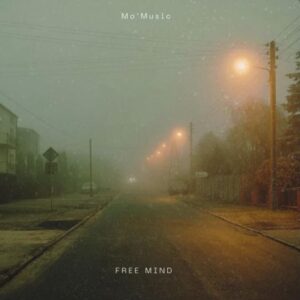
When Free Mind was released in March 2024, it arrived not as a break from Mo’music’s artistic journey, but as a natural unfolding of it. After a series of songs that explored longing, acceptance, and the pursuit of inner calm, Free Mind felt like the moment where reflection gave way to release. It was the sound of an artiste exhaling—choosing lightness without denying depth, clarity without erasing history.
Within Nigeria’s expanding independent music ecosystem, Free Mind stood out for its emotional posture. Many songs that claim freedom do so through defiance or escape, but Mo approached freedom differently. Her definition was internal rather than external. Free Minddoes not reject the past; it loosens its grip. The song reflects the quiet decision to stop carrying emotional weight that no longer serves growth—a theme that resonates deeply with listeners navigating personal transitions.
The emotional tone of Free Mind is noticeably brighter than Mo’s earlier releases, yet it remains grounded. There is optimism here, but it is not naive. Instead, the song communicates earned ease—the kind that comes after long periods of introspection. Mo does not rush this shift; she allows it to emerge organically, signalling a creative maturity that understands when to move forward and when to stay still.
From a production standpoint, Free Mind marks a clear evolution in Mo’s sonic confidence. The arrangement introduces more rhythmic movement and openness, creating a sense of flow that mirrors the song’s theme. As a producer, Mo demonstrates greater comfort with space and momentum, allowing elements to interact more freely without losing cohesion. The track feels airy and expansive, yet intentional in structure.
Mo’s dual role as producer and artiste is especially evident in how seamlessly sound and meaning align. The production does not merely accompany the message of freedom; it embodies it. The rhythm carries a gentle forward motion, while melodic choices avoid heaviness. This balance reflects an artiste who understands that emotional release does not require dramatic contrast—it can be subtle, gradual, and deeply felt.
There is also a psychological honesty at the heart of Free Mind. Mo does not frame freedom as a permanent state or a final destination. Instead, the song suggests freedom as a mindset—something chosen repeatedly rather than achieved once. This perspective gives the song its realism. It acknowledges that clarity can coexist with uncertainty, and that peace does not mean the absence of thought, but the absence of internal conflict.
Living and creating as a Nigerian artiste in the United Kingdom adds another layer to Free Mind’s emotional texture. Migration often brings opportunity alongside isolation, growth alongside questioning. The song feels informed by that balance. It carries the sense of someone learning how to move forward without losing themselves—a common experience within the diaspora, expressed here with quiet grace rather than overt commentary.
What distinguishes Free Mind from many songs about liberation is its refusal to overstate transformation. Mo does not present herself as newly enlightened or radically changed. Instead, she presents continuity. The song feels like a continuation of the emotional conversations begun in Peace of Mind and Fine By Me, now reframed through gentler eyes. This continuity reinforces the authenticity of her narrative.
Within Mo’Music’s catalogue, Free Mind functions as a turning point. It does not abandon introspection, but it softens it. It shows an artiste learning how to carry awareness without burden. This shift is subtle but significant, suggesting a growing confidence not only in her sound, but in her sense of self.
Critically, Free Mind strengthens Mo’s position as an independent artiste committed to emotional intelligence. She resists the temptation to oversimplify freedom into a catchy slogan. Instead, she treats it as a nuanced emotional state, shaped by experience and choice. This approach deepens the song’s resonance, allowing listeners to find their own meaning within it.
The song also highlights Mo’s growing technical fluency as a producer. Her choices feel less cautious and more assured, indicating trust in her instincts. This confidence does not manifest as excess, but as clarity. Each element exists in service of the song’s emotional goal, reinforcing her reputation as a producer who understands intention as much as technique.