






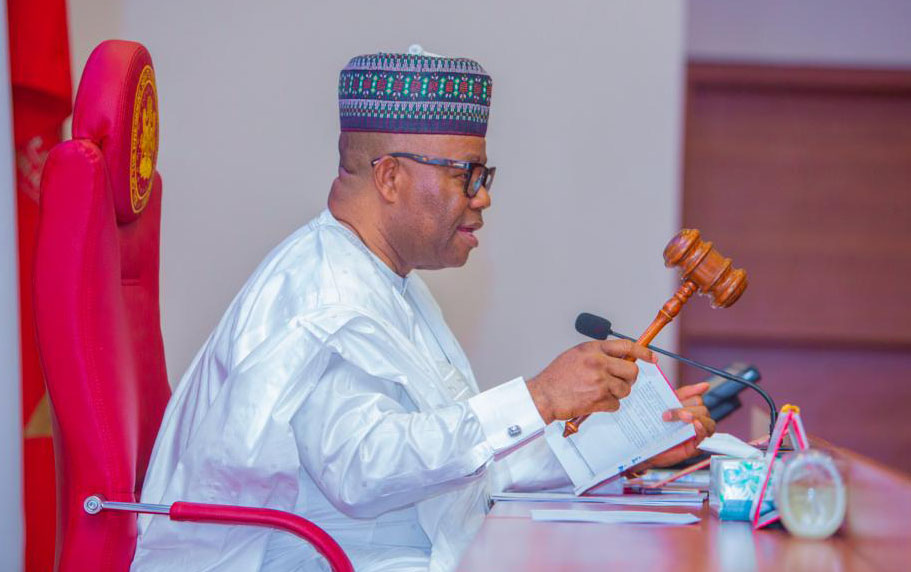
 Nigeria moved a step closer to establishing state police on Wednesday after the Senate passed the Constitution Alteration Bill seeking to decentralise policing across the country.
The development shifts the fate of the proposed reform to the 36 state Houses of Assembly, where at least 24 legislatures must approve the amendment before it can be transmitted to President Bola Tinubu for assent.
The Senate’s approval marks a significant milestone in a decades-long debate over the creation of state police and comes amid growing concerns over terrorism, banditry, kidnapping, communal clashes, and other security challenges across the country.
The bill seeks to establish state-controlled police services alongside the existing Nigeria Police Force, creating a dual policing structure that allows both federal and state police formations to operate concurrently.
Under the proposed amendment, governors will have the power to appoint Commissioners of Police for their states, subject to confirmation by the respective state Houses of Assembly. While the Nigeria Police Force will continue to be headed by the Inspector-General of Police, each state police service will be led by a commissioner appointed by the governor.
The Senate approved the bill after considering a report presented by the Deputy Senate President and Chairman of the Senate Committee on the Review of the Constitution, Senator Barau Jibrin.
Speaking during the debate, Senate Leader Opeyemi Bamidele said the bill was designed to strengthen local security while maintaining national cohesion.
According to him, state police would be responsible for enforcing state laws, maintaining public order, preventing and detecting crimes within their jurisdictions, and protecting lives and property.
He added that the federal police would retain responsibility for national security matters, including counter-terrorism, organised crime, cybercrime, border security, arms trafficking, and interstate criminal activities.
Bamidele also explained that federal intervention in state security matters would only occur under specific circumstances, such as a breakdown of public order, the inability of state police to function effectively, serious violations of fundamental rights, electoral intimidation, or threats to national security.
He noted that such intervention would require written authorisation from the President and remain subject to Senate oversight and judicial review.
To address concerns that governors could abuse state police for political purposes, the Senate included safeguards in the amendment. One provision prohibits state police authorities from arresting, detaining, investigating, or deploying force against individuals or groups solely for criticising the government, except in accordance with the law.
The proposed amendment also empowers the National Assembly to establish minimum national standards for recruitment, training, discipline, accountability, firearms use, complaints procedures, and professional conduct across state police services.
Supporters of the bill argue that locally recruited officers would possess better knowledge of their communities, languages, cultures, and security challenges, thereby improving intelligence gathering and crime prevention.
They also maintain that state governments, which already provide substantial logistical support to federal security agencies, should have greater control over policing within their territories.
However, critics continue to express concerns that state police could be used by governors to intimidate political opponents and influence electoral outcomes.
The Senate adopted the bill through manual voting after technical issues affected its electronic voting system. Senators were called individually to publicly declare their positions on the amendment.
The session was observed by several top government officials, including Kaduna State Governor Uba Sani, Ogun State Governor Dapo Abiodun, Ondo State Governor Lucky Aiyedatiwa, and the President’s Chief of Staff, Femi Gbajabiamila.
With both chambers of the National Assembly now backing the proposal, attention has shifted to state legislatures, whose approval will determine whether Nigeria finally adopts one of its most significant constitutional and security reforms since the return to democratic rule in 1999.